Todo Technology
Overview
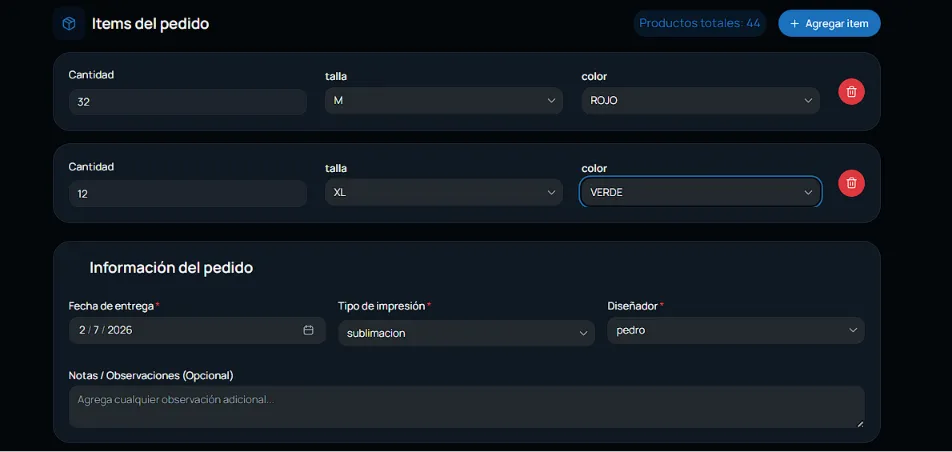
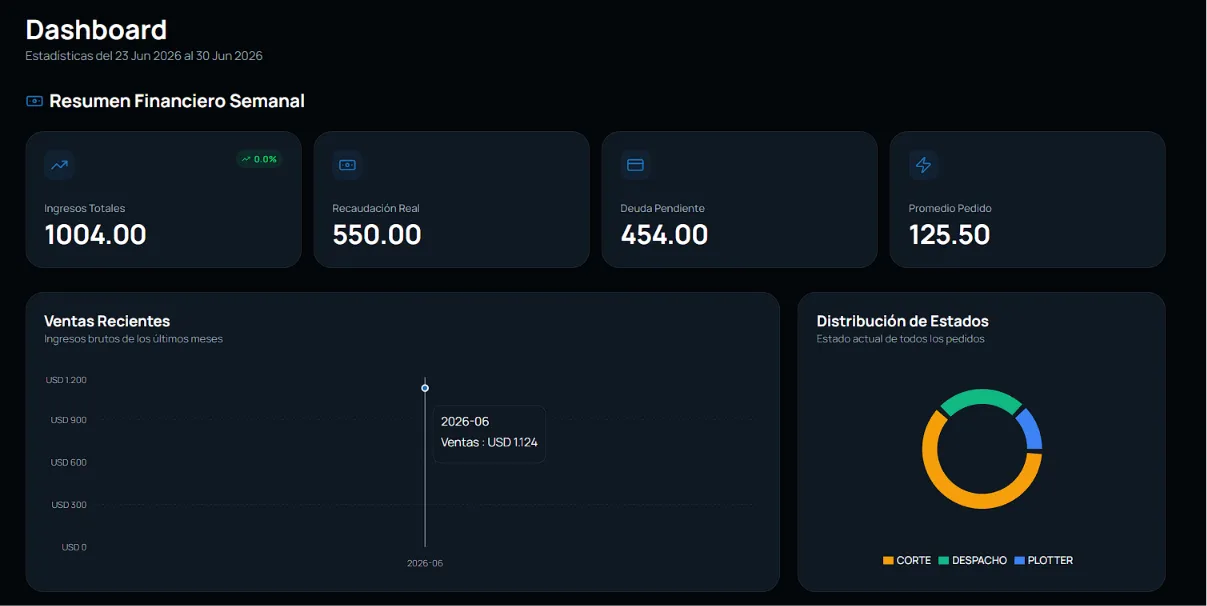
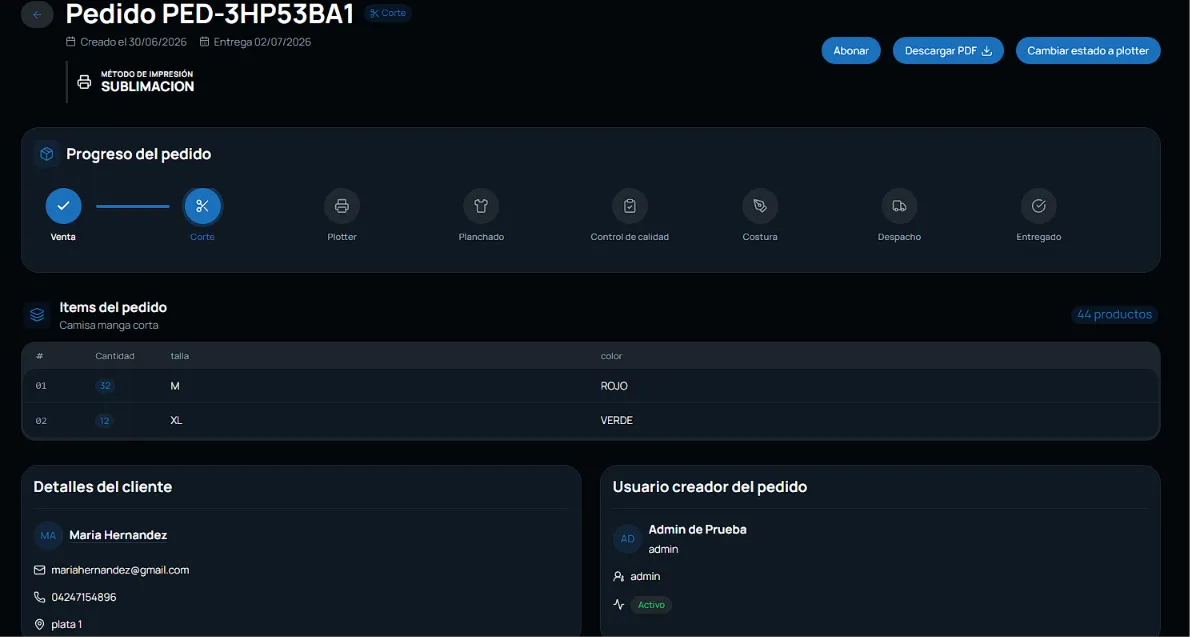
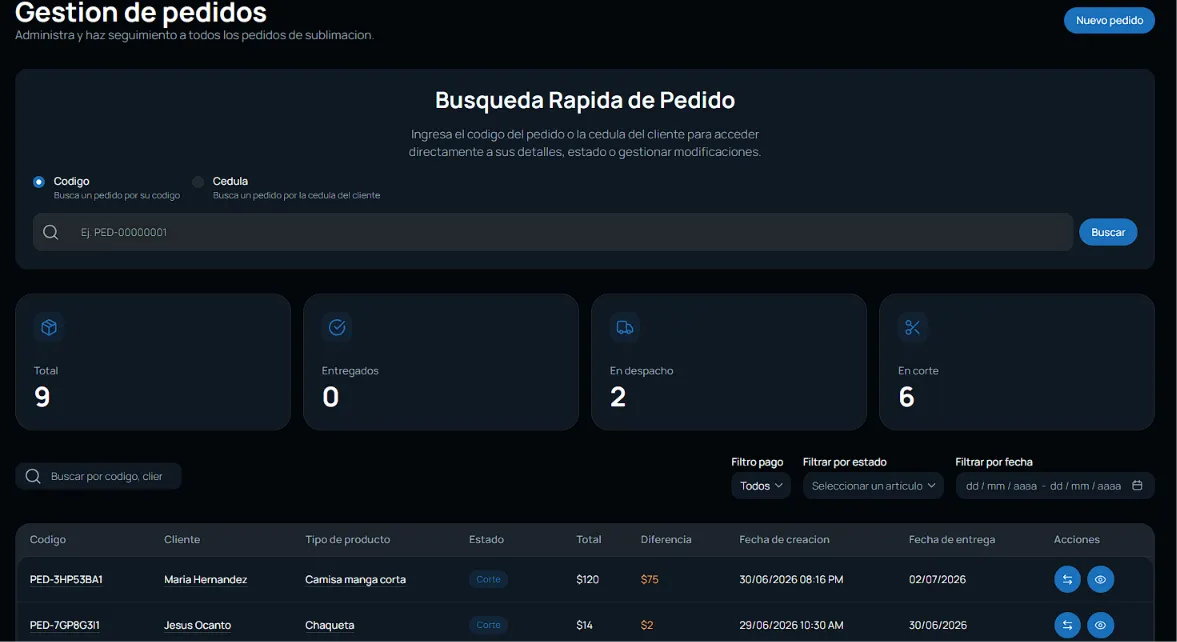
A tailor-made ERP/MES production management system for a large-scale sublimation and textile manufacturing company. The platform synchronizes the sales department with graphic design, fabric cutting, heat-pressing, sewing, and shipping in real-time, ensuring absolute traceability of every order.
A tailor-made ERP/MES production management system for a large-scale sublimation and textile manufacturing company. The
platform synchronizes the sales department with graphic design, fabric cutting, heat-pressing, sewing, and shipping in real-
time, ensuring absolute traceability of every order.
THE PROBLEM
The company was relying on legacy workflows, causing scheduling friction and data loss. The main challenge lay in the extreme
variability of the products (e.g., hats, jackets, lanyards). Each product type required dynamic and conditional
specifications (e.g., some garments allow combined printing techniques, others demand mutually exclusive options like
”With/Without Hood”, and others require handwritten free-text instructions). Modeling this level of flexibility in a
traditional relational database—without creating dozens of empty tables or overcomplicating the user interface—posed a major
architectural roadblock.
THE SOLUTION
I designed and built a dockerized modular web platform that unifies the entire product life cycle:
• Sales Module: Dynamic order creation with built-in financial downpayment validation.
• Admin Panel: A visual schema creator allowing administrators to configure custom product fields with user-friendly Spanish
labels (Single Select, Multi-Select, Radio buttons, and Free-Text).
• Production Dashboards: Interactive work queues optimized for each operational role (designers, cutters, tailors) displaying
only the exact information needed for their current phase.
• Dockerized Infrastructure: Complete containerization of the architecture (FastAPI, Next.js, and PostgreSQL) using optimized
configurations for both local environments and production deployments.
• PDF Receipts: Automated generation of technical production sheets and QR codes for one-click status transitions.
TECHNICAL CHALLENGES
- Hybrid Data Architecture (Dynamic EAV): I solved product variability by extending the traditional relational model in
PostgreSQL. I designed a schema capable of persisting both multi-select checkboxes and manual free-text inputs inside the
same junction table, optimizing queries with proper indexing.- Hybrid Development Environment & Multi-stage Builds: I designed a smart containerization strategy with Docker Compose:
• Hybrid Dev Environment: I configured the PostgreSQL database in an isolated Docker container while letting developers
run frontend and backend applications locally on Windows to take advantage of Next.js Turbopack ultra-fast hot-reloads.
• Production Ready: I crafted optimized Docker images using multi-stage builds for weasyprint and Python/Next.js
dependencies, achieving secure and ultralight production footprints. - Data Processing & Flattening: I implemented client-side flattening algorithms ( flatMap ) to format complex UI selections
into flat API payloads, combined with server-side aggregations to consolidate identical items. This allows the cutting
department to view grouped summaries of pieces without visual redundancy. - Cloud Deployment Resiliency (Railway): To bypass the lack of permanent interactive SSH access in Railway’s classic
Nixpacks deployments, I built an emergency hook into the API startup cycle (lifespan event). This hook automatically detects specific environment variables to reactivate accounts or securely reset the administrator’s password during boot.
- Hybrid Development Environment & Multi-stage Builds: I designed a smart containerization strategy with Docker Compose: